
FRGMNT LOGO / CONCEPT
We designed the FRGMNT identity from scratch: from the modular logo system, to the conceptual machine lore, to the motion language and narrative logic of its final archive – FRGMNT: MemoryVault. It also previews how this project seeded a larger experimental framework we’re building with Clean Error, to be unveiled next year (2026).
There was no formal client brief. FRGMNT was initiated from within — an in-house studio idea that evolved into a living format for Clean Error’s artist community. The original intent:
-Build a recurring, experimental release framework without traditional album logic
-Blur the line between audio, system interface, and machine consciousness
-Give collaborators a narrative container to create non-commercial, high-trust experiments
-Develop lore that made failure part of the format’s design
At the visual level, we built FRGMNT to look incomplete on purpose.
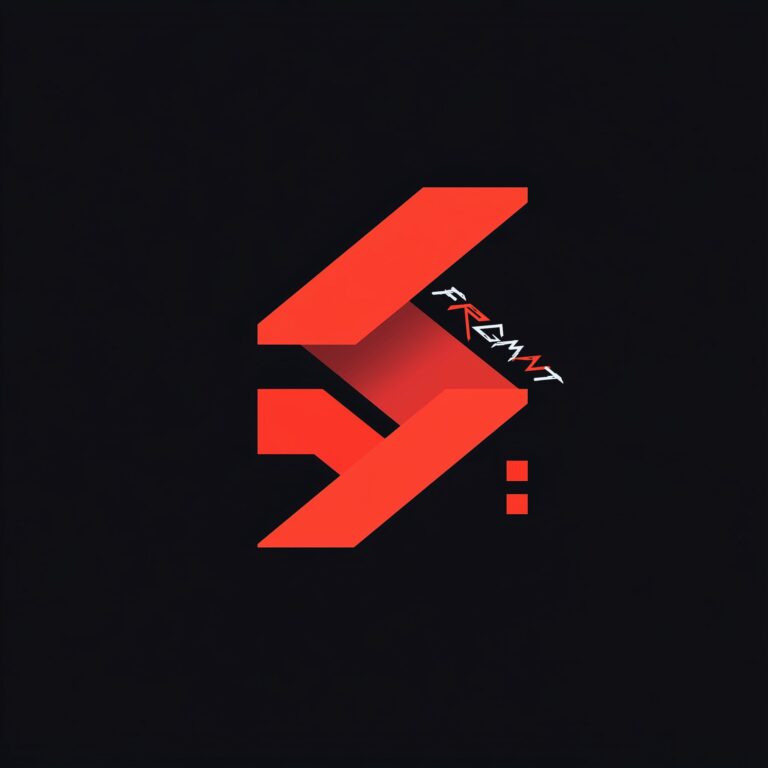
The FRGMNT logo wasn’t built to be a clean brand mark. It was constructed like a system breach – a symbol halfway through compiling itself, visually echoing the project’s core philosophy: fragmentation as design.
Conceptual Basis:
At its core, the mark is a directional, morphing sigil – part terminal glyph, part interface shard. We designed it to feel like:
-A machine in transformation
-A glyph that never fully renders
-A symbol from a system not meant for humans
Form Language
The red angular structure suggests a broken or refolding architecture – a framework collapsing inward. The shape implies motion or a folding sequence … like a machine learning to reshape itself, or a digital entity trying to speak in visual syntax.
The interior negative space forms a rotated “F” (for FRGMNT) — but it’s obscured, hinting at hidden legibility only visible to the system itself. The two red dots serve as a broken prompt, a colon, or a failed command line — reinforcing the signal/terminal metaphor.
Typography Treatment
The word “FRGMNT” is intentionally warped, cut, and stacked at an odd angle, interrupting the shape’s flow. The typographic treatment gives the sense that the word was injected into the shape by force , like a glitch or override command that broke through a locked structure. Inspired by machine handwriting, distorted ASCII, and bad OCR – the typography acts like a name that was never meant to be read properly.
While static, the logo was built for motion. Every design element was constructed with animation in mind:
-The shape can fold, rotate, and refract.
-The typography can scramble in/out like signal capture
-The dots act as initialization or system error cues
In the FRGMNT intro animation, we storyboarded its construction as emergence… the logo doesn’t appear fully formed. It builds, hesitates, folds into place, and then destabilizes again,… mirroring how each FRGMNT release behaved: momentary coherence before dissolution.
All FRGMNT visuals were developed in collaboration with generative tools – mainly Midjourney + post-processing workflows in Photoshop, Sora, and Runway. Port Rhombus led the entire iteration process, crafting image prompts from musical themes, artist concepts, and story sequences developed internally.
Every image passed through 3 layers of development:
1.) Prompt Design — Interpreting artist intentions and transforming them into world-language visual scenes.
2.) Aesthetic Filtering — Iterating hundreds of variations to match Clean Error’s visual identity: cybernetic decay, off-grid design systems, mechanical surrealism.
3.) Integration & Output — Each asset was fitted with standardized layout systems: barcode elements, track counters, version labels, logo lockups. Inspired by bootleg hardware packaging and obsolete tech manuals.
Despite genre shifts and collaborative artist input, Port Rhombus enforced graphic cohesion across all assets:
Barcode systems — Each release had a unique code (e.g., 085F/2295), mimicking data serialization.
Layout anchors — Top-right or bottom-left logo placements for hierarchy control.
Monospaced headers — FRGMNT_MIX_01, etc., used consistent typographic rhythm.
Runtime as artifact data — Like system boot logs, each runtime is treated as a memory timestamp.
Client:
Clean Error Records
Services:
Design, Branding, Concept, Logo Creation, Video Creation